Mold Remediation in Charlotte, and How to Tell It Was Done Right
Mold remediation is the removal and cleanup of mold-damaged material, done so that spores do not spread to the rest of the house. North Carolina does not license it, so knowing what a proper job looks like is the homeowner's best protection.
Proper mold remediation in Charlotte fixes the moisture, contains the work area under negative air, removes porous material with growth, HEPA-cleans what stays, dries everything, and checks the result before rebuilding. This Old House (2026) puts most jobs at $1,200–$3,750. North Carolina has no state mold license.
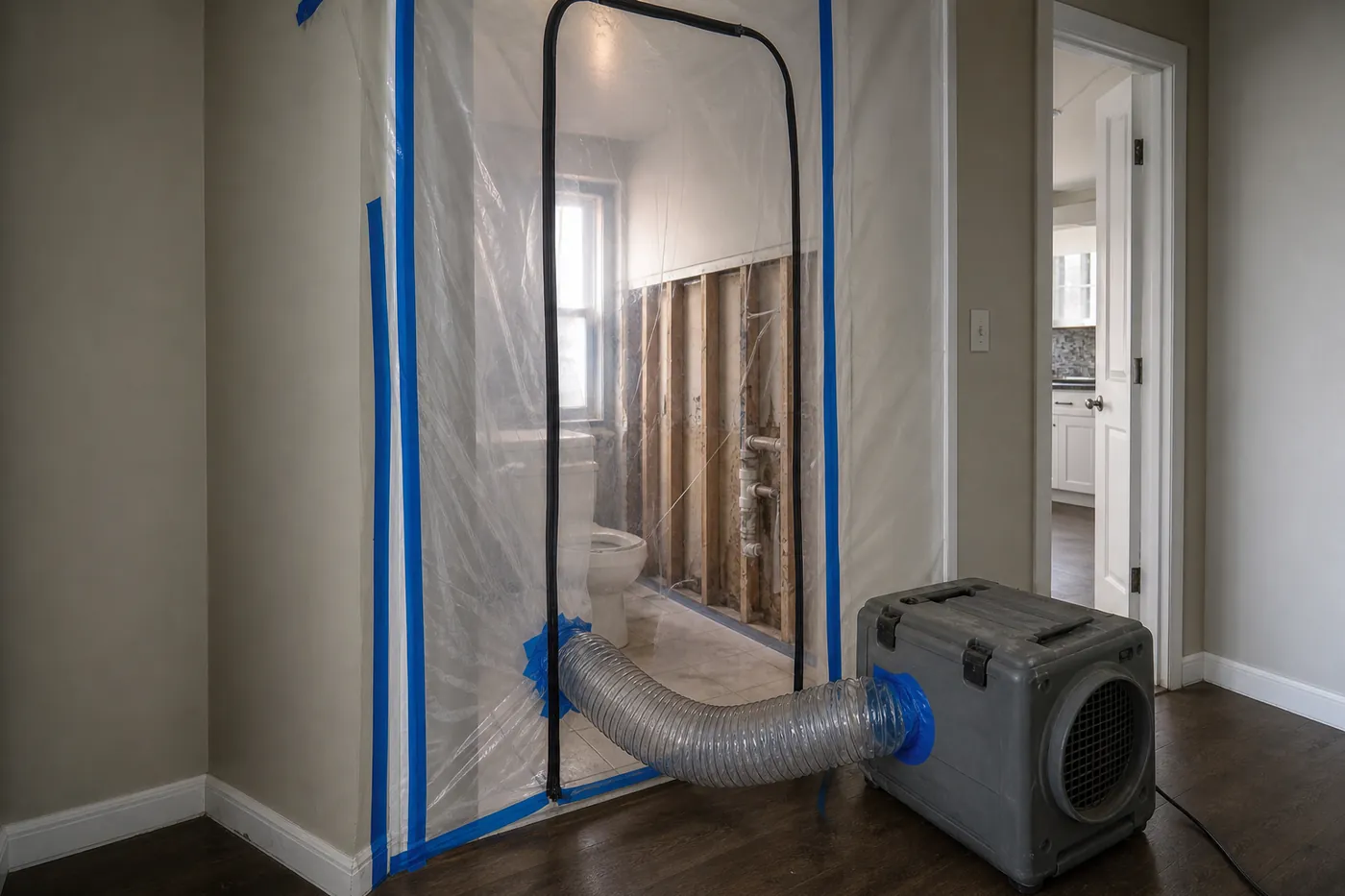
What mold remediation in Charlotte should include
- Source fixed first. The leak, drainage problem or condensation is corrected, or scheduled with the trade that will correct it.
- Containment. Plastic sheeting seals the work area, and an air filtration machine keeps it under negative pressure so dust flows in, not out.
- Removal. Drywall, insulation, carpet pad and ceiling tile with growth are bagged inside the containment.
- Cleaning. Framing and hard surfaces are HEPA-vacuumed and wiped; the EPA does not recommend biocides such as bleach as a routine step.
- Drying. Materials are brought back to normal moisture levels.
- Checking. A visual inspection, moisture readings and, if agreed, samples confirm the area is clean and dry.
Judging a company when the state sets no rules
NC State Extension says no federal or state certification programs exist for mold remediation, and it points to the IICRC's standards for inspection, cleaning and remediation as the most widely accepted industry benchmark. That makes the written scope your main safeguard. Ask which standard the company follows, what it will remove, how it will contain the area, how it will confirm the job is done, and what its warranty covers. Remember the scale: once rebuilding pushes a project to $40,000 or more, North Carolina requires a licensed general contractor (G.S. 87-1).
Apartments, condos and townhomes
Charlotte has 46,339 homes in buildings of 50 or more units, and tens of thousands more in smaller multi-unit buildings (U.S. Census ACS 2020–2024). Mold in one unit often starts in another: a neighbor's toilet supply, a shared roof, or a stack pipe in the wall. Before remediation starts in a shared building, find out who owns the source and who pays to fix it, the owners' association, the landlord or the unit owner, so that the clean room is not soaked again next month. Compare prices in the Charlotte mold removal cost guide.
Doing the small jobs yourself
The EPA's line is about 10 square feet. Below that, most households can scrub hard surfaces with detergent and water, wearing gloves, goggles and an N-95 respirator, and dry the area. Throw out porous items that stay moldy. Do not paint over mold, and do not run a fan that blows across moldy material into the rest of the house.
Questions homeowners ask
Should mold be sprayed or fogged instead of removed?
Spraying or fogging does not take mold out of drywall or insulation, and dead mold can still cause reactions. The EPA does not recommend biocides as a routine part of cleanup. Physical removal of porous material, HEPA cleaning and drying, with the water source fixed, is the approach the guidance describes.
Describe the mold, and the home
A sentence or two helps: where you see or smell it, what got wet first, and whether you own the home or rent it. A specialist working in Charlotte gets the note and replies to you.