Mold Clues in a Charlotte Home, Sorted by What You Notice
Mold usually announces itself to one sense before the others. Start with the clue you have, read the short answer, and follow the link if it fits.
Most mold clues in Charlotte homes point to one of three sources: a slow plumbing leak, summer condensation on cool surfaces, or rain or creek water getting in. A smell without anything visible is the case where an inspection, and sometimes testing, earns its fee. Visible patches under about 10 square feet are a cleanup, per the EPA.
Smell: a closet or bedroom smells sour, but nothing shows
Hidden growth is likely, often behind a wall shared with a bathroom or on the back of drywall along an exterior wall. Check the floor and baseboard for softness or stains, and the ceiling under any upstairs bathroom. This is the situation where an inspection with moisture readings, and possibly an air sample, is worth it. See mold testing.
Smell: the house smells musty only when the AC runs
Suspect the cooling system: a drip pan holding water, a clogged condensate line, or ducts sweating where they pass through hot attic or crawl air. The EPA advises keeping drip pans clean and drain lines flowing. Have the air handler and coil checked before cleaning anything else. See mold remediation.
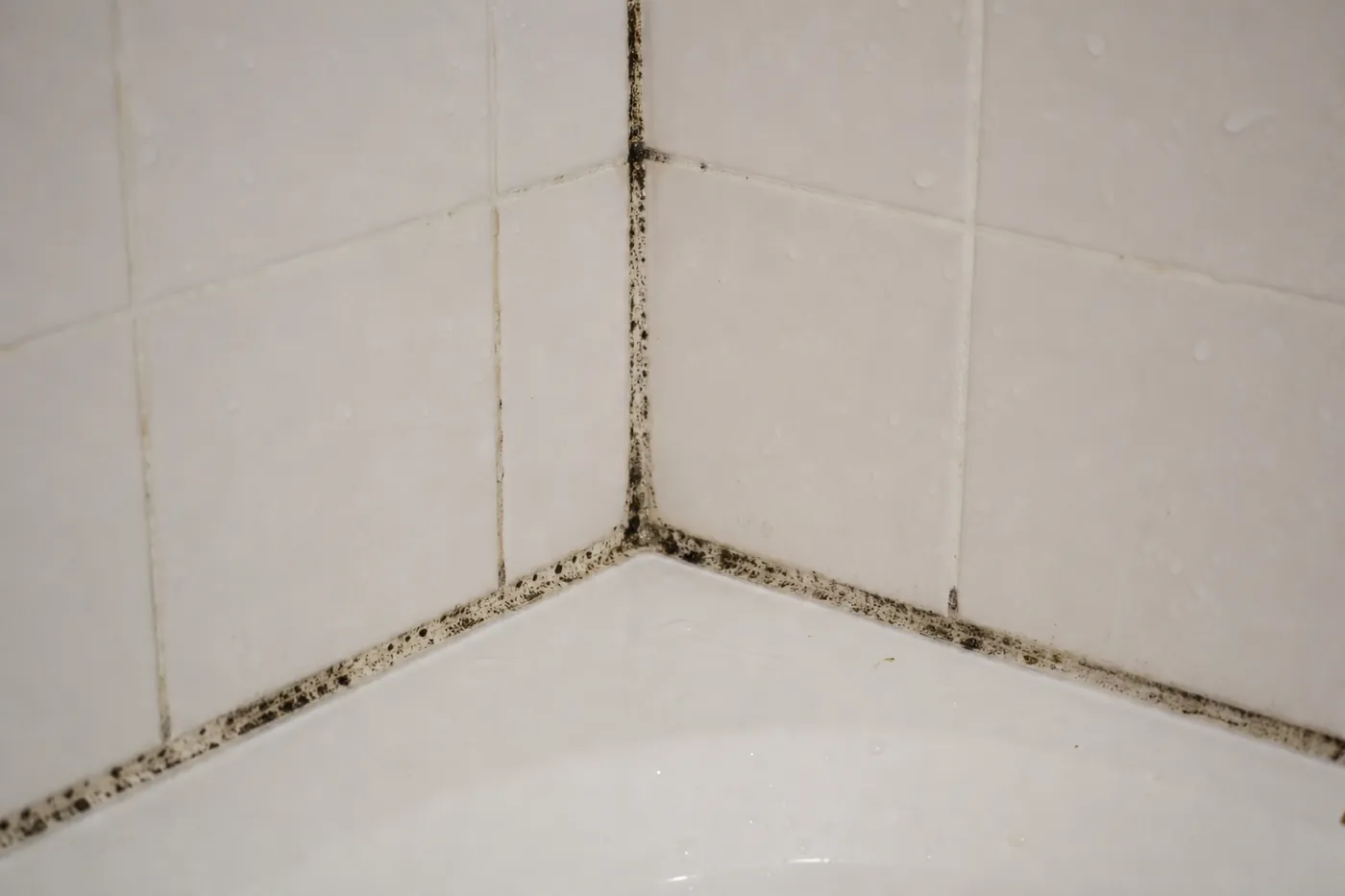
Sight: black lines in shower caulk and grout
Surface growth fed by daily wetting. Scrub with detergent, dry the area, run the bath fan for 20 to 30 minutes after showers, and replace caulk that stays black. If tile is loose or the wall behind it feels soft, water is getting behind the tile, and that is a bigger job.
Sight: a gray-green bloom on the lower drywall after heavy rain
Water reached the wall from outside or from below: a gutter overflow, soil sloping toward the house, or creek water in a low-lying yard. The EPA says to dry water-damaged areas within 24 to 48 hours; growth that is already visible means the lower drywall comes out. See creek floods and mold.
Touch: the floor by the toilet or tub feels soft
A wax ring, supply line or tub drain has been leaking into the subfloor, sometimes for months. Mold and rot often go together here. Shut off the toilet supply if it is the source and have the floor opened before it fails. In a rental, report it in writing the same day. See rental mold.
Touch: bedroom windows run with water on winter mornings
Indoor humidity is high for the season. Sleeping bodies, showers and cooking add moisture that condenses on cold glass. The EPA calls condensation a sign of high humidity; keep indoor relative humidity under 60 percent with fans and airflow, and wipe sills so mildew does not take hold.
Body: someone feels worse at home and better away
Mold can be one cause. The CDC lists a stuffy nose, sore throat, coughing or wheezing, burning eyes and skin rash among possible reactions, and notes people with asthma or mold allergies may react severely. A doctor should assess symptoms. In the home, look for the water. See mold testing.
Describe the mold, and the home
A sentence or two helps: where you see or smell it, what got wet first, and whether you own the home or rent it. A specialist working in Charlotte gets the note and replies to you.